
NocturneGatheringsevents & booking concept.
Upcoming dates, locations, price bands, inclusions, private-event services, FAQs, gallery, and a booking-request form that summarises the visitor's selection — structured so it could go behind a paid campaign next week.

- Discipline
- Conversion design
- Format
- Campaign-ready site
- Year
- 2026
- Build
- Static HTML / CSS / JS
Fictional hospitality concept built end to end by ClixFeed to demonstrate date-led discovery, price transparency, and a booking flow that survives being opened on a phone in a queue.
Try the concept in a real browser.
This is a self-contained interactive prototype. Form submissions and bookings stay in-browser — they are not stored.Nocturne Gatherings — live concept ↗
Selling a specific evening, not a room type.
Boutique hospitality and curated event businesses sell specific experiences in time — a dinner series, a seasonal residency, a private gathering package. Their websites must communicate scarcity, inclusivity, and tone without feeling like a generic hotel template or an opaque 'enquire for pricing' wall.
- Generic hotel templates flatten what makes the experience specific.
- "Enquire for pricing" attracts unqualified enquiries and wastes admin time.
- Public ticketed and private hire are different buyers needing different paths.
Nocturne Gatherings was built as a ClixFeed concept to feel like an operating business. It is intentionally production-structured — the kind of site you could put behind a paid social campaign next week, once the form endpoint and real inventory exist.
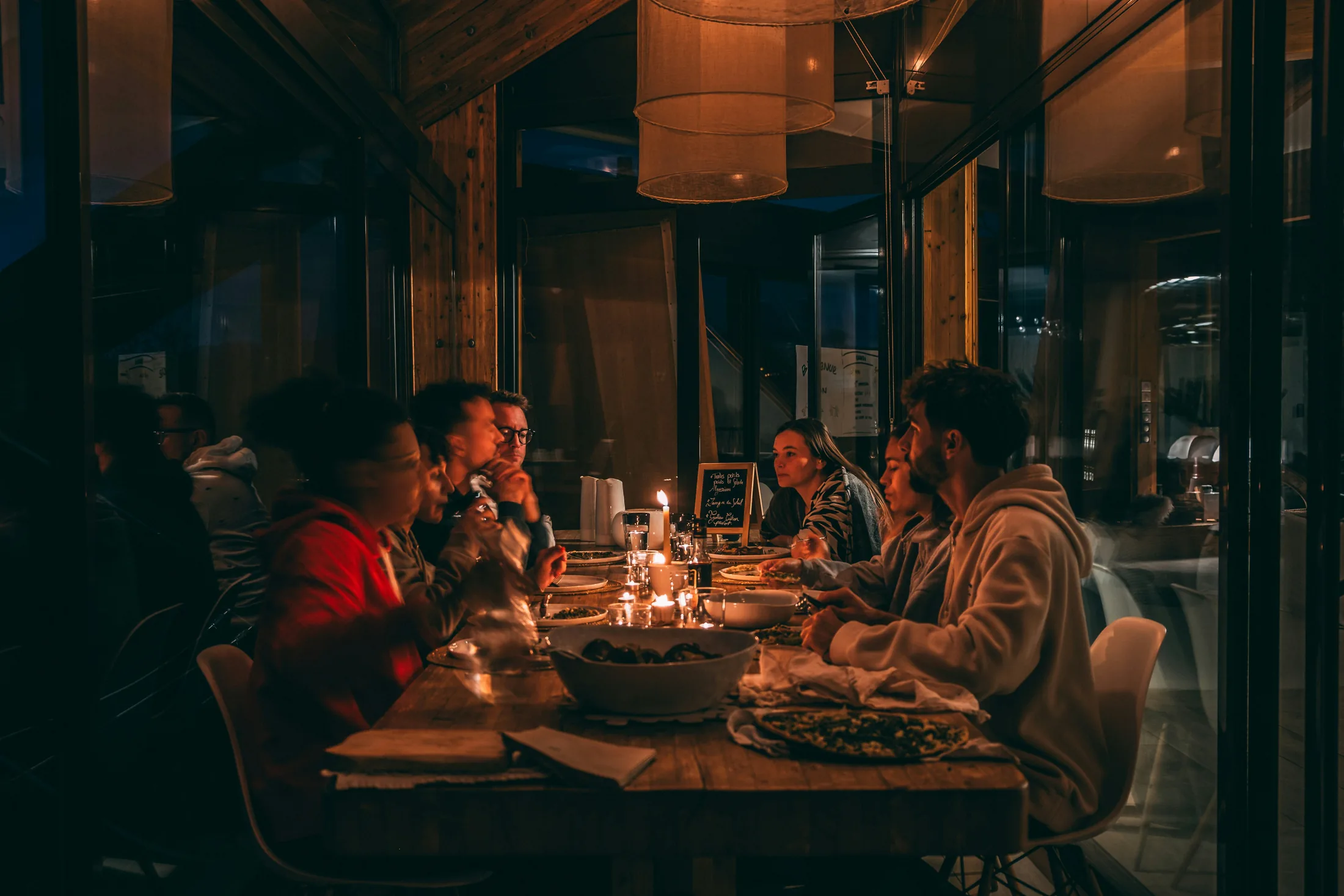
Atmosphere sells the ticket. Clarity closes it.
Hospitality and event sites must do five things at once. Nocturne addresses each directly.
- Make the offer tangible — what happens, where, when, for whom.
- Show price signals early — reduce unqualified enquiries without killing mystery.
- Separate public experiences from private hire — different buyers, different paths.
- Capture structured requests — dates, headcount, experience name — so inbox chaos reduces.
- Feel atmospheric and trustworthy — taste sells the ticket; clarity closes it.
Desire → specifics → logistics → action.
The scroll order mirrors purchase consideration. Each section removes one objection before the visitor reaches the form.
| # | Section | Role |
|---|---|---|
| 01 | Hero | Atmospheric positioning + next date cue |
| 02 | Experiences | Dated listings with price and location |
| 03 | Inclusions | What guests receive — reduces repetitive questions |
| 04 | Private gatherings | B2B and celebration path |
| 05 | Gallery | Tone and setting proof |
| 06 | FAQ | Logistics, dress, dietary, cancellation patterns |
| 07 | Request form | Structured booking enquiry with experience summary |
| 08 | Footer | Credits, policies, concept disclosure |
Scroll orderWant it → know the date and price → trust the logistics → request the booking.
When, where, and what it costs — before anything else.
Experiences surfaced as structured rows instead of marketing copy. Each row carries the four facts a guest asks before they read a single paragraph — date, city, format, and entry price.
- 14 SepSaturdayAutumn tasting menu — six courses₹6,800per guest
- 05 OctSundayLong-table supper with guest chef₹8,400per guest
- 26 OctSundayCoastal residency — overnight₹18,500per guest
- 16 NovSundaySunset grill series · pilot₹9,200per guest
Confident transparency.
Five decisions shape the experience — and most of them are about what the site refuses to hide.
- Experience rows as data-bearing components — each entry carries structured attributes powering both display and the booking summary.
- Pricing visible, premium intact — from-prices appear in context with inclusions, testing confident transparency over opacity.
- Private events as a parallel offer — a dedicated section qualifies corporate and celebration buyers without diluting the public calendar.
- Request, not instant checkout — high-consideration gatherings need human confirmation, so the form is a complete request flow, not fake inventory sync.
- Local imagery — photography lives in /assets/ so the deployed concept never depends on remote URLs.
Content and behaviour stay aligned — the pattern ClixFeed uses for every campaign-ready page, so the marketing team can change a date in one place and see it everywhere.
Evening palette, editorial type.
Deep tones, warm highlights, serif display for occasion, sans for logistics. Photography carries atmosphere; type carries information. Motion is restrained — nothing blocks reading price or date on mobile.
- Display — high-contrast serif, -0.05em
- Grid — date rail, then narrative
- Motion — slow reveal, no autoplay noise
Handle objections before the form.
Primary action: submit a booking request for a listed experience. Secondary: enquire about private gatherings.
- Structured summary — selecting an experience pre-fills name, date, location, and price band, cutting admin friction on both sides.
- Validation and completion states — client-side validation and success messaging are complete; endpoint connection is a configuration step.
- FAQ as objection handling — cancellation, dietary requirements, and arrival guidance appear before the form.
- Mobile-first ticketing behaviour — dates, prices, and CTA stay legible on small screens with appropriate field types.
What this demonstrates for real clients.
For boutique hotels, supper clubs, retreat hosts, wedding venues, and experience operators.
Time-based offer architecture
Calendars, residencies, and seasonal launches designed as data, not paragraphs.
Pricing without cheapening
From-prices and inclusions presented confidently so premium positioning survives transparency.
Qualifying enquiry forms
Structured request flows that arrive in your inbox ready to action — not generic contact blobs.
Dual audience paths
Public ticketed and private hire served side by side without diluting either.
Campaign-ready builds
Static, deploy-anywhere sites that can take paid traffic the week they launch.
No fake scarcity
No sold-out badges or invented guest counts — the honesty itself is the positioning.
What it would take to go live.
To go live, a client would typically complete the following. The concept de-risks each by settling the experience first.
- Connect the form to email, CRM, or booking ops tool via the data endpoint.
- Replace fictional dates, prices, and availability with live inventory rules.
- Add payment or deposit flow if instant booking is required.
- Update privacy copy and cancellation terms with legal review.
- Replace concept photography licensing as needed for commercial use.
An event page has one job: make the date, the place, and the price impossible to miss.
What this concept set out to demonstrate
That a boutique hospitality or events business can present dates, pricing, and inclusions with a booking-request flow that pre-structures enquiry data — without fabricated guest reviews or occupancy statistics.
- 08
- Sections in flow
- 01
- Structured request
- 00
- Sold-out fakes
- 00
- Invented reviews
Hosting experiences worth selling properly?
Send your calendar, price bands, and how bookings currently arrive — we'll come back with a scope outline.